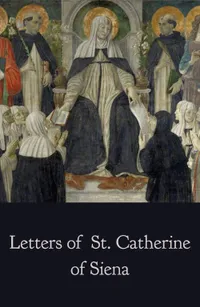
Letters of St. Catherine of Siena
Book Summary
This book provides an introduction to the life and writings of St. Catherine of Siena, followed by a selection of her personal and political letters. It portrays her as a powerful 14th-century figure who was simultaneously a mystic, a spiritual guide, and a significant political force. The letters reveal a woman of intense faith, practical wisdom, and profound love, who fearlessly engaged with the sins and turmoil of her era. Her correspondence covers a wide range of topics, from intimate spiritual counsel for friends and disciples to bold admonitions for popes and kings regarding the corruption and division within the Church.
The collection begins with an analysis of Catherine's character and historical context. Her letters are described as unliterary but intensely personal and powerful, dictated with a passionate desire to communicate truth. As a friend and guide, she corresponded with a vast network of people from all social classes, showing remarkable psychological insight and adaptability. She combined uncompromising hatred of sin with a deep, compassionate trust in the sinner's potential for good. As a mystic, her spiritual experiences were not detached from her active life but gave her strength for her practical duties. Her public life was dominated by three goals: the return of the Papacy from Avignon to Rome, the reform of the corrupt clergy, and the launch of a new Crusade. She dedicated her life to the ideal of a unified and pure Church, even as she witnessed its deep divisions and failures.
A significant portion of the letters consists of personal and spiritual counsel to her "famiglia" of disciples and other individuals. To her friends, like Monna Alessa, she offers practical advice on achieving spiritual perfection through moderation, humility gained from self-knowledge, and love centered in God rather than the creature. To family members, such as her brother Benincasa and niece Nanna, she writes with tender, simple affection, urging patience in worldly troubles and a heart shaped by faith. In letters to fellow Religious, she performs deep analyses of the spiritual life, warning against the subtle dangers of spiritual pride, the trap of seeking consolation over true virtue, and the error of judging others. She consistently teaches that true perfection lies not in ascetic feats but in slaying self-will and cultivating an infinite "holy desire" for God.
The book also highlights Catherine's influential role in the major political and ecclesiastical affairs of her time. Her letters to Pope Gregory XI and his successor, Urban VI, are filled with astonishingly bold and candid advice. She respectfully but firmly rebukes them for their weaknesses—Gregory's timidity and Urban's harshness—and exhorts them to act as true, manly shepherds. She pleads for peace with the rebellious city of Florence, acting as a mediator, while simultaneously urging the popes to reform the corrupt clergy whose actions fueled the conflict. Her letters to secular rulers, such as the King of France, and to the schismatic cardinals demonstrate her clear-sighted political understanding and her unwavering commitment to the unity and integrity of the Church under one true pontiff.
The final section reveals the culmination of Catherine's spiritual journey through the profound suffering of her last years. Witnessing the Great Schism and the failure of her hopes for Church reform, she experiences an intense mystical passion, offering her own life as a sacrifice for the sins of the Church. Her last letters to her confessor, Fra Raimondo, vividly describe these experiences. In one vision, the burden of the "Ship of the Church" descends upon her shoulders, initiating a period of excruciating physical and spiritual pain. She sees herself as a victim, consuming and shedding her life for the "sweet Bride" of Christ. This agony is not one of despair but of triumphant, sacrificial love, in which she finds a new and final form of martyrdom, dying with a deep, mystical joy in her union with God and her service to His Church.