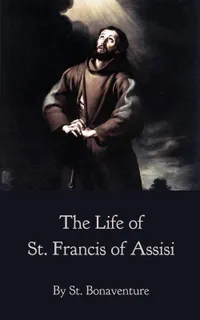
The Life of St. Francis of Assisi
Book Summary
The book chronicles the spiritual journey of Francis from a wealthy merchant's son to a devout servant of God who embraces absolute poverty, humility, and obedience. It recounts the founding and expansion of the Franciscan Order, guided by Francis's example of living according to the Gospel. The narrative details his profound love for Christ, which manifests in his compassion for the poor, his respect for all of creation, and his desire for martyrdom. The account culminates in the miraculous imprinting of the stigmata (the wounds of Christ) on his body, followed by his death, canonization, and the numerous posthumous miracles attributed to his intercession, which serve to confirm his sanctity.
Section Summaries
1. Conversion and the Founding of the Order
The narrative begins with Francis as a worldly but compassionate youth in Assisi. A series of divine interventions, including a debilitating illness, a vision of a palace with armor marked by the cross, and a direct command from the crucifix in the church of Saint Damian to "repair My House," steer him away from his secular life. This leads to a dramatic public renunciation of his father and inheritance, where he strips himself naked before the bishop to dedicate his life to "Our Father, Which art in heaven." He embraces a life of extreme poverty, ministers to lepers, and begins rebuilding ruined churches. Inspired by the Gospel reading to "possess neither gold, nor silver," he adopts a simple tunic and rope girdle, and begins to preach peace and repentance. He soon attracts his first followers, including the wealthy Bernard of Quintavalle, and the group grows to twelve. Francis writes a simple Rule for their life based on the Gospels and travels to Rome, where Pope Innocent III, moved by a dream of Francis propping up the falling Lateran Basilica, gives his approval.
2. Francis's Virtues and the Growth of the Order
With papal sanction, the Franciscan Order grows rapidly. Francis, as a model for his brethren, exemplifies the virtues he preaches. He practices extreme austerity, often eating only what he begs and sleeping on the bare ground, viewing his body as a "brother ass" to be subdued. He demonstrates profound humility, seeking to be contemned by others and relinquishing his leadership of the Order to live in obedience to a warden. His defining virtue is his love for "Lady Poverty," which he espouses as the queen of virtues and the foundation of his Order, refusing any form of ownership. This piety extends to all of creation; he preaches to birds, commands swallows to be silent, and refers to animals as his brothers and sisters. Driven by an ardent love for Christ, he twice attempts to travel to Syria and Morocco to seek martyrdom by preaching to the Saracens, but is thwarted by circumstance and illness, eventually meeting the Soldan of Babylon but failing to convert him. Throughout, his life is marked by a deep commitment to prayer, which often leads to ecstatic visions and prophetic insights into the hearts of men and future events.
3. The Stigmata, Death, and Canonization
Two years before his death, while fasting on Mount Alverna, Francis's imitation of Christ reaches its apex. After praying to share in Christ's suffering, he has a vision of a six-winged Seraph bearing the image of a crucified man. As the vision fades, it leaves his body miraculously imprinted with the stigmata: the marks of the nails in his hands and feet and the wound of a lance in his side. He hides these wounds as best he can for the remainder of his life. After this event, his health, already frail from his ascetic life, declines further. Knowing his death is near, he asks to be taken to Saint Mary of the Little Portion. There, he has himself laid naked on the earth to embrace poverty to the very end. He blesses his brethren, asks for the Gospel of John to be read, and passes away. His body, now bearing the undeniable and publicly visible marks of the stigmata, is taken in a great procession to Assisi. Pope Gregory IX, convinced of Francis's holiness by the miracles wrought during his life and after his death, canonizes him in 1228.
4. Posthumous Miracles
The final section of the book is dedicated to the numerous miracles performed through Saint Francis's intercession after his death, which serve as divine proof of his sainthood. These miracles are grouped by type and attest to his power in heaven. The truth of his stigmata is confirmed through visions and miraculous healings. He raises several people from the dead, including a boy crushed under a winepress and a woman who returns from the dead to confess a final sin. He saves many from the brink of death, rescuing them from shipwrecks, collapsing buildings, and mortal wounds. His intercession is shown to be powerful for women in perilous childbirth, for the blind who regain their sight, and for those suffering from various diseases, paralysis, and demonic possession. The narrative concludes by emphasizing that those who disrespect the Saint or his feast day are punished, while the faithful who call upon his name receive swift and merciful aid, demonstrating his continued role as a powerful advocate for humanity.