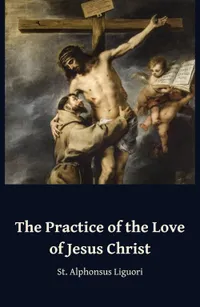
The Practice of the Love of Jesus Christ
Book Summary
The Practice of the Love of Jesus Christ is St. Alphonsus Liguori's guide to the virtues by which a Christian returns love for love to Christ. It opens with his thesis: "The whole sanctity and perfection of a soul consists in loving Jesus Christ, our God, our sovereign good, and our Redeemer." After an Introduction on why Christ deserves that love, the body of the book works through St. Paul's description of charity in 1 Corinthians 13. Each of its thirteen chapters takes one phrase, such as "Charity is Patient" or "Charity Seeketh Not Her Own," and turns it into a practical rule: "He that loves Jesus Christ loves Meekness," "He that loves Jesus Christ desires Nothing but Jesus Christ." Every chapter ends with "Affections and Prayers," a short prayer to Jesus followed by an appeal to Mary. The book closes with a summary of the virtues, a Novena to the Holy Spirit, and devotions for obtaining the seven gifts of the Holy Ghost.
Why Jesus Christ Deserves Our Love
The Introduction is in four parts. It begins with creation, where plants and flowers reproach a hermit for his coldness toward God, and moves on to the Passion. Christ could have redeemed us without suffering, Alphonsus argues, but chose the cross to show how much He loved us, and he cites St. Bernard: "It was love, careless of its dignity." The second part presents the Eucharist as "the Sacrament of love, the pledge of love." It urges frequent Communion with suitable rather than worthy dispositions and answers those who stay away because they feel cold. The third part grounds confidence in the merits of Christ, drawing at length on the letters of the Venerable John of Avila. The fourth argues that we are obliged to love Christ, and it introduces St. Paul's list of the marks of charity as the plan for the rest of the book.
Patience, Meekness, and the Remedies for Lukewarmness
"He that loves Jesus Christ loves Sufferings": crosses borne patiently make the soul like Christ, and all the saints were "martyrs either of the sword or of patience." The chapter on kindness takes St. Francis de Sales as its model of gentleness, especially for superiors correcting those under them, and it warns against being angry with oneself after a fault. The chapter on envy teaches purity of intention, which Alphonsus calls the "heavenly alchemy by which iron is turned into gold." The longest chapter, "Charity Dealeth Not Perversely," separates unavoidable lukewarmness from the deliberate kind that holds the soul back. It then sets out five remedies: the desire of perfection, the resolution to attain it, mental prayer, frequent Communion, and prayer. Prayer, he insists, is necessary for salvation and not merely useful.
Humility, Detachment, and Conformity to God's Will
The central chapters strip away self-regard. A proud person is "like a balloon filled with air," and many who seem meek "resemble the hedgehog" once they are corrected. The chapter on ambition tells the story of Brother Justin, a Franciscan whom papal honors filled with conceit and led to ruin, and it recommends the hidden life. "Charity Seeketh Not Her Own" calls for detachment from creatures, from relatives (above all in choosing a vocation), from human respect, and from self-will. It also includes a stern argument that sanctity of life is required before receiving Holy Orders. Later chapters treat anger and then conformity to the will of God and obedience to superiors and directors. Whoever resigns himself to God in trouble, Father Balthazar Alvarez says, "travels to God post-haste." The first of two chapters titled "Charity Beareth All Things" applies patience to sickness, poverty, bereavement, and contempt.
Faith, Hope, Temptations, and Desolation
In the last three chapters, charity "believeth all things" because love trusts every word of the beloved. Alphonsus traces unbelief to disordered living rather than to the obscurity of faith. In the chapter on hope he argues that hope and charity increase each other, that desiring heaven is desiring God, and that longing to be united with God is the highest charity possible on earth. The final chapter calls temptations and spiritual desolation the hardest trials of a soul that loves God. It explains why God permits temptations and names prayer as "that remedy of all remedies." It ends with St. Jane Frances de Chantal, who endured forty years of interior trials. An "Abstract of the Virtues" then restates the book's counsel as a rule of life, closing with maxims such as "He that prays is saved, and he that prays not is damned" and "God is cheap at any cost."
The Novena to the Holy Spirit
The appended Novena runs from the feast of the Ascension to the eve of Pentecost. The first nine of its ten meditations each present divine love through one image: a fire, a light, a fountain, a dew, a repose, a strength, a guest who dwells in the soul, a bond, and a treasure. The tenth sets out the means of becoming a saint. Throughout, prayer is the furnace and key of divine love. The "Pious Exercise" that follows opens with the Veni Creator Spiritus. It then gives seven prayers, one for each gift of the Holy Ghost from fear of the Lord to wisdom, and closes with a Humble Supplication and the hymn "The Soul All for God."