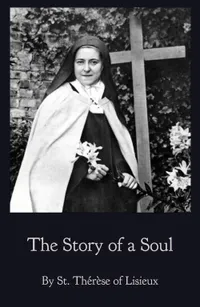
The Story of a Soul
Book Summary
"The Story of a Soul" is the autobiography of Saint Thérèse of Lisieux, a 19th-century French Carmelite nun. She outlines her spiritual development through the lens of what she called her "little way"—a path to holiness based on childlike trust, confidence, and complete self-surrender to God's merciful love. The narrative follows her life from a happy, devout childhood through her entry into the Carmel convent at a young age, her intense interior trials, and her eventual death from tuberculosis. Thérèse emphasizes that sanctity is accessible to all, not through great deeds, but by performing small, everyday actions and sacrifices with immense love for God.
Early Life and Spiritual Awakening
The first part of the book details Thérèse's idyllic early childhood in a deeply religious family, cherished as the youngest child. Her world is shattered by the death of her mother when she is four, an event that transforms her from a happy, outgoing child into one who is timid, overly sensitive, and prone to tears. This period of intense suffering is punctuated by a profound spiritual awakening. Key events include her First Communion, where she experiences a deep, loving union with Jesus, and a miraculous "Christmas conversion" at age thirteen, where she instantly overcomes her hypersensitivity and gains the strength of character that allows her to pursue her vocation with unwavering determination and a newfound thirst for saving souls.
The Path to Carmel and the "Little Way"
This section focuses on Thérèse's firm resolve to enter the Carmelite convent at the unprecedentedly young age of fifteen. Faced with opposition from church authorities due to her youth, she undertakes an audacious journey to Rome with her father to appeal directly to Pope Leo XIII. Although her request is initially deferred, her persistence and absolute trust in God's will eventually overcome all obstacles. Upon entering the Carmel, she finds that religious life is not one of constant spiritual consolations but of profound interior dryness and hidden sacrifices. It is here that she develops her "little way," realizing she is too small for the great austerities of other saints. Instead, she resolves to become a "little flower" for Jesus, offering Him the "flowers of little sacrifices"—every small look, word, and hidden act of charity done for love alone.
The Martyrdom of Love and Final Illness
In the final years of her short life, Thérèse endures her greatest trials. She enters a "night of the soul," a severe, prolonged temptation against faith where the thought of Heaven, once her greatest consolation, becomes a source of torment and darkness. Simultaneously, she battles a painful, consuming illness (tuberculosis). She embraces these immense physical and spiritual sufferings as her "martyrdom of love," offering herself as a "victim of holocaust" to God's merciful love to console Him and save souls. Despite her agony, she maintains a profound peace and an unshakeable confidence in God. She prophesies that her mission will truly begin after her death, promising to "spend my heaven in doing good upon earth" and "let fall a shower of roses," a mission to teach her "little way" to all souls. Her life concludes with a death of intense suffering, yet one of perfect love and surrender, solidifying her legacy as a guide for ordinary people seeking holiness in their daily lives.