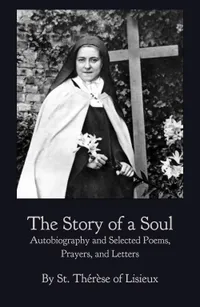
The Story of a Soul: Autobiography of St. Thérèse of Lisieux and Selected Letters, Poems, and Prayers
Book Summary
This book is the autobiography of Saint Thérèse of Lisieux, a 19th-century French Carmelite nun. Entitled "The Story of a Soul," it chronicles her spiritual journey from early childhood to her death from tuberculosis at the age of 24. The central theme of the work is her "little way" of spiritual childhood—a path to holiness based on complete trust, self-surrender, and love, rather than grand, heroic deeds. The narrative details her devout family life, her calling to the convent, the development of her unique spirituality, and her profound sufferings, culminating in her offering of herself as a "Victim of Merciful Love."
Early Life and Spiritual Awakening
The story begins with a prologue detailing the devout Catholic faith of her parents, Louis and Zélie Martin, and Thérèse's birth in Alençon, France, in 1873. Her early childhood is marked by a happy, affectionate family life, which is profoundly disrupted by her mother's death when Thérèse is just four years old. This loss transforms her from a lively child into one who is shy, sensitive, and prone to tears. A period of intense suffering follows, including a mysterious and severe illness from which she is miraculously cured by a smile from a statue of the Virgin Mary. A pivotal moment occurs on Christmas Day 1886, when she experiences a "complete conversion," receiving the grace to overcome her hypersensitivity and beginning a "giant's race" in her spiritual life. This event ignites in her a deep thirst for the salvation of souls, and she feels an insistent call to enter the Carmelite convent at the young age of fifteen to pray for sinners and priests.
Life in the Carmel and The "Little Way"
After overcoming numerous obstacles, including a direct appeal to Pope Leo XIII during a pilgrimage to Rome, Thérèse enters the Carmel of Lisieux in 1888. She finds that the reality of religious life is not one of constant spiritual consolation but is filled with interior trials, including profound spiritual dryness and hidden sacrifices. Instead of being discouraged, she develops her "little way," embracing her weakness and spiritual poverty. She resolves to be a "little child" who abandons herself with blind trust into the arms of God the Father. Her path is one of love, focusing on performing small, everyday actions and bearing annoyances with patience, all for the love of Jesus. She understands charity not as a feeling but as a choice to love her fellow sisters as Jesus loves them, particularly those she finds most difficult.
The Victim of Love and Final Suffering
In the final years of her short life, Thérèse's spirituality deepens as she offers herself as a "Victim of Holocaust to God's Merciful Love." This offering is followed by a period of intense interior and exterior suffering. She endures a "night of the soul," a severe trial against her faith where the thought of Heaven, once her greatest comfort, becomes a source of torment and darkness. Simultaneously, she battles a painful and debilitating final illness with tuberculosis. Despite her agony, she maintains a profound peace and continues to practice her "little way" of love and self-surrender. It is during this time that she prophesies her posthumous mission: "I will spend my Heaven in doing good upon earth," promising to "let fall a shower of roses" and teach her "little way" to souls. She dies on September 30, 1897, with her final words, "My God, I . . . love . . . Thee!"